Sep 21, 2026
Turtle Season in Playa Grande: Everything You Need to Know
Turtle Season in Playa Grande: Everything You Need to Know
After sunset, when the surfers have gone home and the shoreline grows quiet, something extraordinary can happen along Costa Rica’s Pacific coast.
A dark shape emerges from the water. Slowly and deliberately, a female sea turtle crosses the sand in search of a suitable place to lay her eggs. It is a journey sea turtles have repeated for millions of years, long before Playa Grande became a beach town or travelers began arriving in Costa Rica.
Today, turtle nesting remains one of Guanacaste’s most remarkable natural phenomena. Witnessing it is a rare privilege that requires patience, respect, and careful protection of the animals at the heart of it.
Why Playa Grande Is Famous for Sea Turtles
Playa Grande is best known for its leatherback sea turtles, called tortugas baula in Spanish. These enormous ocean travelers can weigh around 800 pounds, although some grow even larger, making them the largest sea turtles in the world.
Unlike other species, leatherbacks do not have hard shells. Their backs are covered by flexible, leathery skin marked with distinctive ridges, giving them their English name.
Leatherbacks spend most of their lives in the open ocean, migrating thousands of miles between feeding and nesting grounds. Yet when it is time to lay their eggs, females return to sandy beaches like those found along the Guanacaste coast.
Turtle nesting season in Playa Grande officially spans October 15 through February 15, with hatchlings generally appearing toward the end of the season. Leatherback sightings have become increasingly rare, however, and should never be treated as a guaranteed vacation attraction. If you witness one, you are seeing something truly exceptional.
Five Sea Turtle Species, One Small Country
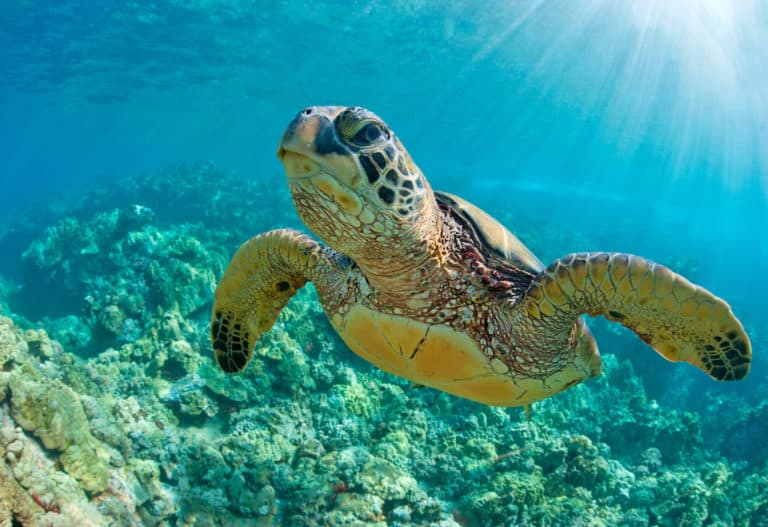
Five of the world’s seven sea turtle species can be found in Costa Rica: leatherback, olive ridley, green, hawksbill, and loggerhead turtles.
Each species follows its own migration patterns and nesting calendar. This means that although leatherback nesting is seasonal in Playa Grande, turtle activity is taking place somewhere in Costa Rica during much of the year.
The olive ridley is the most abundant species found here. It is particularly famous for participating in arribadas, mass nesting events during which thousands of females arrive on the same beach over several nights.
Leatherbacks, on the other hand, are far more difficult to encounter. Their dwindling numbers make the continued protection of Playa Grande and other nesting beaches especially important.
How Conservation Shaped Playa Grande
Organized leatherback research and monitoring in Playa Grande began in 1988. At the time, egg poaching was one of the most immediate threats facing nests along the beach.
Scientists, conservationists, residents, and government officials worked together to protect the nesting area. Las Baulas National Marine Park was established through Costa Rican law in the 1990s, creating safeguards for Playa Grande, Playa Ventanas, Playa Langosta, nearby estuaries, and an extensive marine area offshore.
The park’s creation also changed how people interacted with nesting turtles. Informal nighttime observation gave way to controlled conservation, research, and educational efforts.
Despite these protections, sea turtles continue to face threats that extend far beyond the park. Industrial fishing, discarded nets and lines, plastic pollution, artificial light, illegal poaching, rising temperatures, and coastal development all affect their chances of survival.
What Happens During Turtle Nesting?
When a female turtle reaches the beach, she moves beyond the high-tide line and searches for a suitable nesting location. Using her flippers, she clears the sand and digs an egg chamber.
After laying her eggs, she fills the chamber, packs down the sand, and camouflages the nest before returning to the ocean. The process can take well over an hour.
Several weeks later, surviving hatchlings emerge, often after dark. They instinctively move toward the brightest natural horizon, which should be the night sky reflected over the ocean.
Artificial lights can send them in the wrong direction. Phone screens, flashlights, flash photography, beachfront lighting, and crowds can interfere with nesting females and hatchlings. This is why responsible observation must always be led by trained guides.
Where Can Visitors See Nesting Turtles?
Due to new regulations, turtle tours inside Las Baulas Marine National Park at Playa Grande are no longer available. Visitors should not enter the beach after dark in search of turtles or attempt to observe nesting activity independently.
RipJack Inn can instead arrange guided turtle tours to nearby protected beaches, including Playa Minas, where visitors may have opportunities to see green turtles, leatherbacks, or hatchlings depending on current activity.
Another option is the Ostional National Wildlife Refuge, located south of Playa Grande near Nosara. Ostional is one of Costa Rica’s most famous olive ridley nesting sites. Its arribadas are especially active during the green season, often between July and November, and are influenced by lunar and tidal cycles.
During an arribada, visitors may witness turtles crawling ashore, digging nests, laying eggs, and returning to the sea. Access is regulated, and visitors must enter with an authorized guide.
Other important nesting regions include Santa Rosa National Park in northern Guanacaste, the Osa Peninsula, and Tortuguero on Costa Rica’s Caribbean coast.
No responsible tour operator can promise a sighting. Weather, tides, nesting cycles, and hatchling activity determine what may happen on any particular night.
Turtle Nesting FAQs
Can I see turtles throughout the year?
Potentially. While Playa Grande’s official leatherback season runs from October 15 through February 15, sea turtles may be spotted offshore year-round while surfing, snorkeling, sailing, diving, or paddleboarding.
Can I take photographs?
Rules vary by location, but flash photography should never be used. Follow your guide’s instructions regarding cameras, phones, and lights.
Can I touch a turtle or help a hatchling?
No. Never touch, pick up, block, or redirect a turtle unless instructed by an authorized conservation professional.
How can visitors help protect sea turtles?
Reduce single-use plastics, remove litter from the beach, dispose of fishing line safely, keep beachfront lights low, and never leave belongings or obstacles on the sand overnight.
Observation Begins With Respect
A nesting turtle is not performing for an audience. She is completing an ancient and vulnerable process that depends on darkness, space, and minimal disturbance.
By booking an authorized tour, following your guide’s instructions, and accepting that nature makes no promises, you help protect one of Costa Rica’s most extraordinary natural traditions. Whether you see an 800-pound leatherback or a tiny hatchling beginning its first journey, it is an experience that puts the scale and wonder of the natural world into perspective.
 English
  Spanish