Ocean Safety Guide: Playa Grande
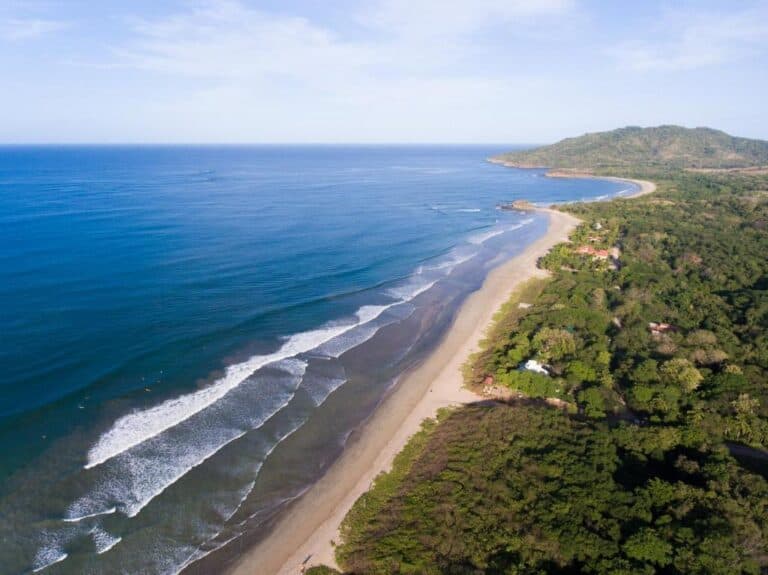
Warm water, wide-open sand, and waves worth waking up for: Playa Grande, Costa Rica, makes it easy to spend your vacation barefoot. Your flip-flops may barely leave your bag.
Here at RipJack Inn, we love our beautiful stretch of Pacific coastline. We also respect it. Playa Grande is a surf beach, and its waves and currents deserve your attention, even when you’re only planning a quick dip.
Whether you’re learning to surf, traveling with little ones, or cooling off between beach walks, a little preparation helps you enjoy the ocean more safely.
1. Check the conditions before every swim
Yesterday’s lovely swim doesn’t guarantee the same experience today. Waves, tides, and shifting sandbars can change where and how currents flow. No tide is universally safe for swimming.
Before getting in, spend several minutes watching from dry sand. Waves arrive in sets, so a quiet spell can be misleading. Notice where larger waves break and how far they wash up the beach. Waves crashing hard onto shallow sand are a reason to stay out.
Watch for foam drifting steadily sideways or moving offshore, which can reveal currents. Check local surf forecasts, tide times, and posted warnings, and ask our team or a qualified surf instructor for local context.
Keep reassessing as the tide changes. Small waves and calm-looking water can still hide strong currents. These checks help you spot hazards; they can’t guarantee a safe swim. When in doubt, enjoy the view from dry sand or cool off in the pool.
2. Understand rip currents before you need to
A rip current is a concentrated flow of water moving away from shore. Waves bring water toward the beach; rip currents are one way that water travels back out.
They can carry even strong swimmers offshore. Being fit or a confident pool swimmer doesn’t make you immune, and shallow water isn’t automatically safe.
Possible clues include:
A gap in the line of breaking waves.
Foam or sand-colored water moving away from the beach.
A channel that looks different from the water beside it.
That inviting, quieter-looking gap between waves may actually be the current’s pathway. Some rips are hard to spot, so use these clues as warnings, not proof that another spot is safe.
If a rip current carries you away from shore:
Stay calm and float. The current carries you outward; it doesn’t pull you underwater. Conserve your energy.
Signal for help. Raise an arm and shout when you can, while staying afloat.
Don’t fight straight back toward the beach. If you’re able, swim parallel to the shoreline to get out of the current, then angle toward shore once you’re clear.
If you can’t get out, keep floating and signaling. Don’t exhaust yourself trying to overpower the water.
3. Make family beach time a team effort
Always swim with a buddy. With children, assign one adult to watch the water without checking messages, reading, or getting absorbed in conversation. Consider it the one vacation job with a strict no-scrolling policy. Take turns, and clearly hand over the job.
Keep young children and inexperienced swimmers within arm’s reach. Use properly fitted, approved life jackets. Inflatable rings and water wings aren’t substitutes for life jackets or supervision.
Stay away from rough shorebreak, where waves crash directly onto shallow sand. Never dive headfirst into unfamiliar water, and keep watching incoming waves, even near the edge. If the surf is knocking people off their feet, move back onto dry sand.
4. Catch your first waves with an instructor
Playa Grande’s surf is a big part of its appeal. For beginners, a lesson is a smart way to get introduced to both the fun and the conditions.
A qualified local instructor can help choose an appropriate location, explain currents, and teach board control and surf etiquette. Ask our team about arranging a lesson through RipJack Inn.
Swimmers should give surfers plenty of space, and surfers should stay within their abilities. A board and leash don’t replace swimming skills or good judgment. Head in before you’re exhausted, and save the celebratory drinks for afterward.
5. Give the Tamarindo estuary its space
At the southern end of Playa Grande, the Tamarindo estuary separates the beach from Tamarindo. This is crocodile habitat, and the river mouth has its own water hazards.
Never swim, wade, or paddle a surfboard across the estuary. Shallow-looking water doesn’t make it a safe shortcut.
Ask our team about an appropriate boat crossing or travel by road. Keep children away from the water’s edge there, respect warning signs, and give wildlife plenty of distance.
6. Plan for sun and changing weather
Bring drinking water, take shade breaks, and use a rash guard, hat, and sunscreen. Choose a water-resistant, broad-spectrum (reef-friendly) sunscreen and follow its directions, including reapplying after swimming or toweling off. A sea breeze can make it surprisingly easy to forget how much sun you’re getting.
If you hear thunder, leave the water and beach immediately. Seek shelter in a substantial enclosed building or hard-topped vehicle, not under a tree or beach umbrella. Wait at least 30 minutes after the last thunder before returning outside.
Enjoy sunset from the sand, then leave swimming for daylight, when hazards and anyone needing help are easier to see.
Know how to help
If someone is struggling, alert a lifeguard and call 911. Give the beach name and nearest access point or landmark. If possible, throw something that floats from a safe position.
Avoid entering the surf yourself unless you’re a trained, equipped rescuer. An instinctive rescue attempt can put another person in danger.
Taco Star (restaurant in front of the beach) is also a hub for an informal safety communication network, with local surfers and neighbors looking out for beachgoers and helping coordinate assistance.
At RipJack Inn, we’re happy to help you plan your beach day or arrange surf instruction. Bring your curiosity, ask questions, and let the conditions guide your plans. There’s plenty of pura vida to enjoy, whether you’re catching waves or watching them roll in.
 Spanish
 English